
 In modern architectural façades, surface precision is no longer optional — it defines the visual quality of a building. However, traditional solid aluminum panels, due to their monolithic material structure, often face structural limitations when exposed to thermal processing and long-term environmental stress.
As architectural standards continue to demand lighter, stronger, and more fire-safe materials, next-generation composite systems such as SKYPANEL 3D are redefining what façade stability truly means.
Surface Flatness
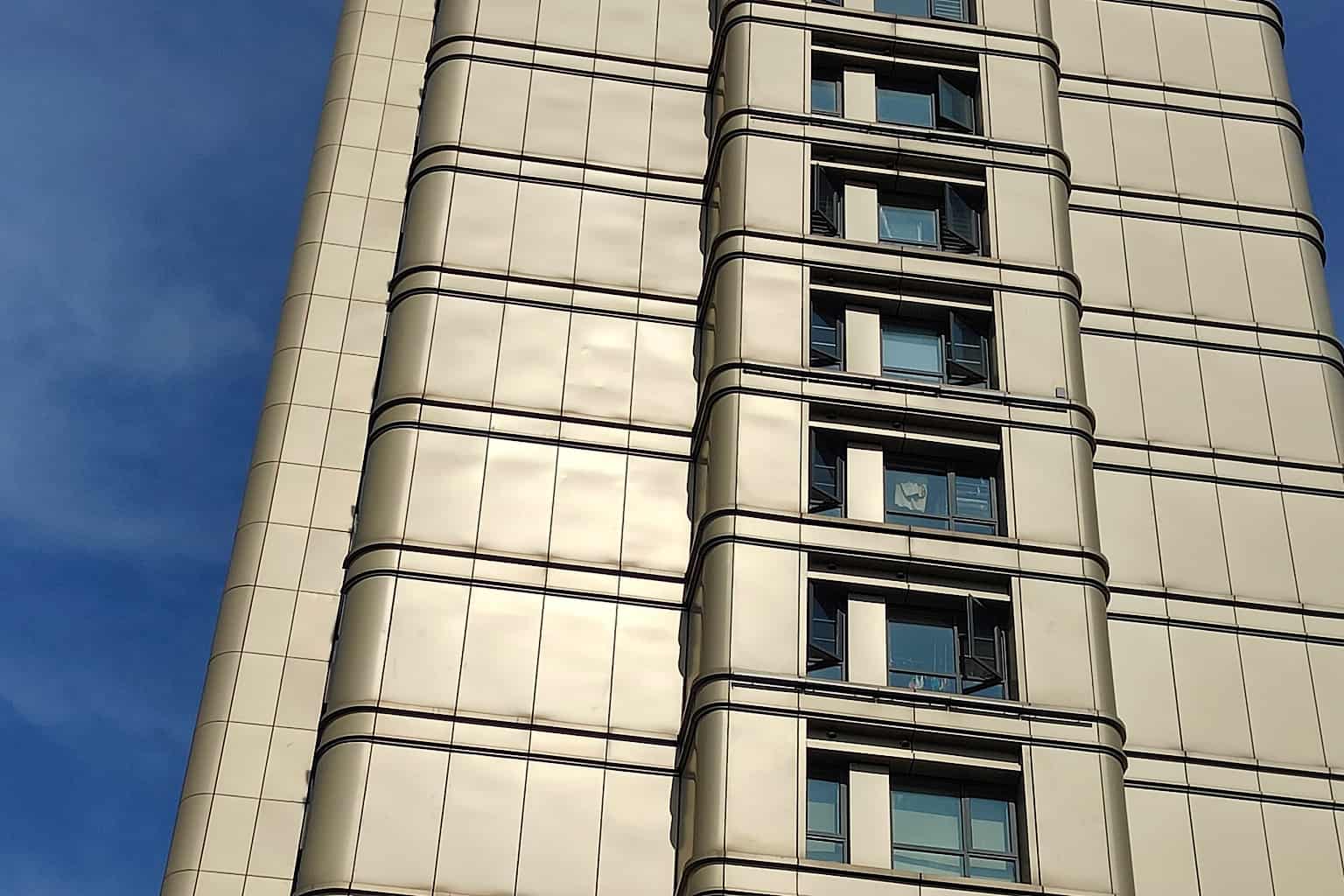
One of the most common challenges with solid aluminum panels occurs after high-temperature coating and fabrication processes. Because the panel consists of a single metal sheet, internal stresses generated during rolling, bending, or heating cannot be evenly redistributed.
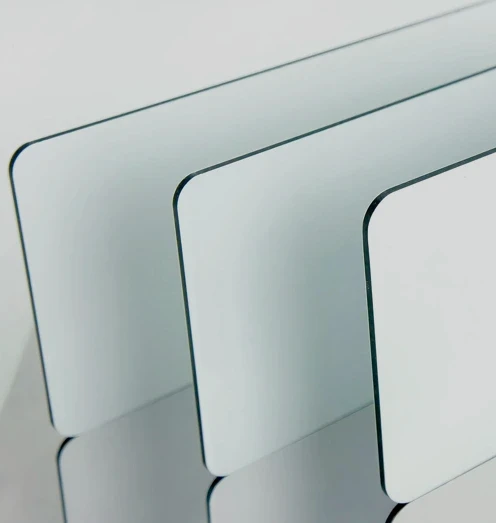
As a result, localized deformation — often referred to as waviness or oil-canning — may appear on the surface, particularly under certain lighting conditions.
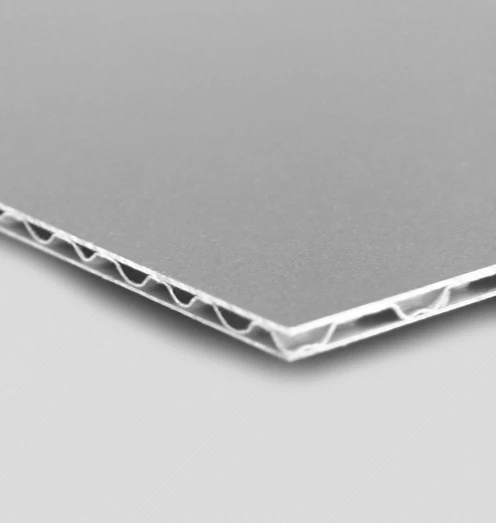
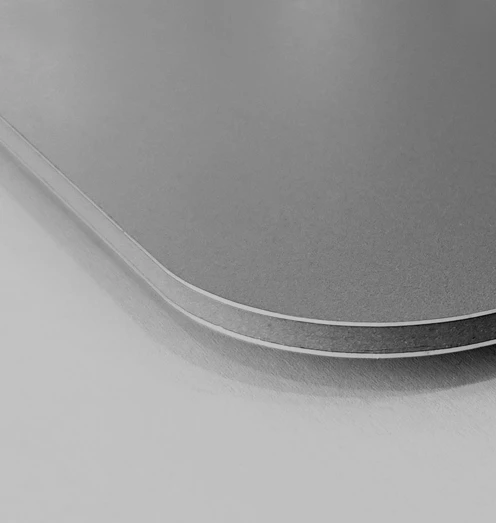
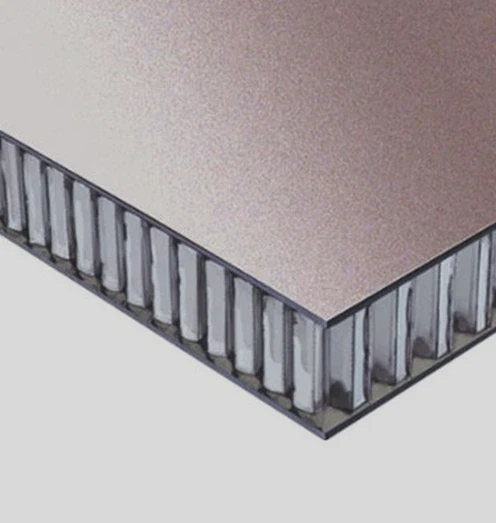
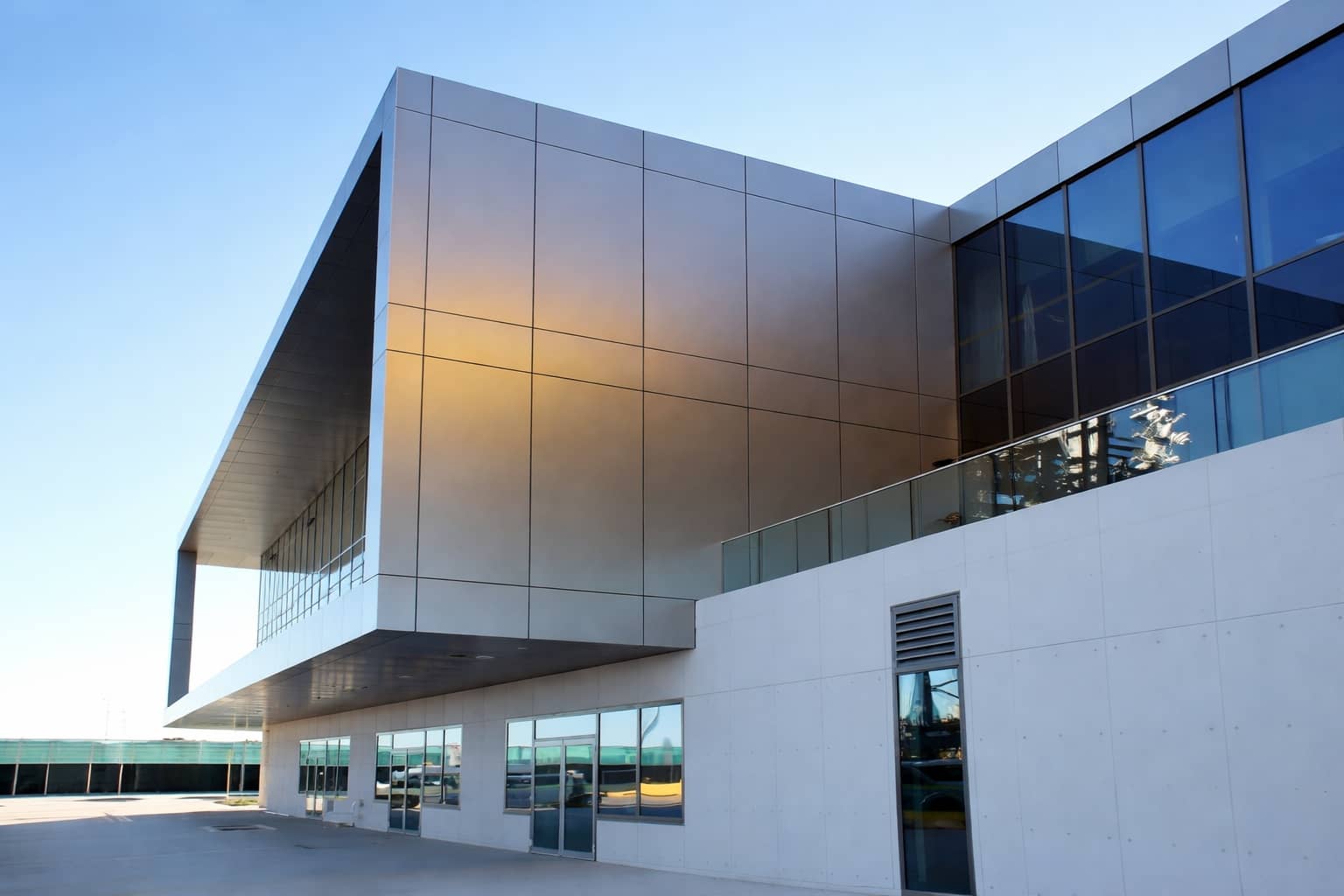
SKYPANEL 3D addresses this issue through its engineered three-dimensional composite structure. By separating and stabilizing the aluminum layers through a structured core, internal stresses are dispersed rather than concentrated. This structural design significantly improves surface stability and reduces visible distortion, delivering a cleaner and more refined façade finish.
Fire Performance
Fire safety remains a critical factor in material selection, especially for high-rise and public buildings.
While solid aluminum panels can meet fire-resistance standards depending on thickness and system design, SKYPANEL 3D — constructed entirely from aluminum components — achieves A2 fire classification.
It does not contribute to flame spread and produces no toxic smoke under fire exposure, making it particularly suitable for hospitals, transportation hubs, airports, and other safety-sensitive environments.
Weight and Processing Efficiency
Weight plays a decisive role in façade engineering.
At comparable thickness levels, SKYPANEL 3D weighs approximately 50% less than solid aluminum panels. This reduction directly lowers structural load on subframes and supporting systems, contributing to improved installation efficiency and potential cost savings.
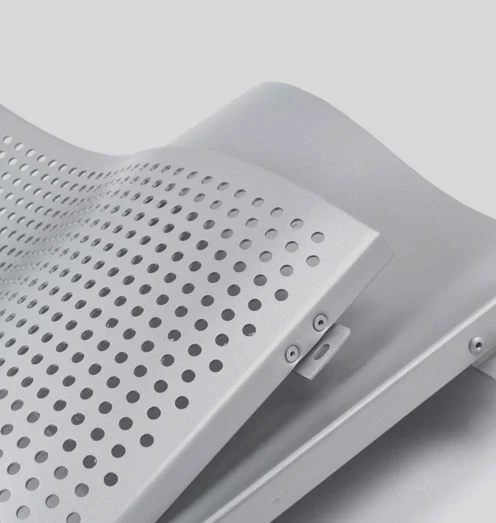
In addition, the composite structure enhances fabrication flexibility. Cutting, bending, and shaping can be achieved with greater precision and reduced risk of deformation, offering architects expanded design freedom without compromising structural integrity.
Conclusion
Solid aluminum panels have long been a reliable solution in façade construction. However, increasing architectural complexity and performance requirements reveal the inherent limitations of single-material systems.
By combining structural stability, improved flatness, fire safety, and reduced weight, SKYPANEL 3D represents an evolution in façade material engineering — offering a more balanced solution for contemporary high-rise and landmark projects.